John Mellkvist: “Why Communicators Get Better with Age”
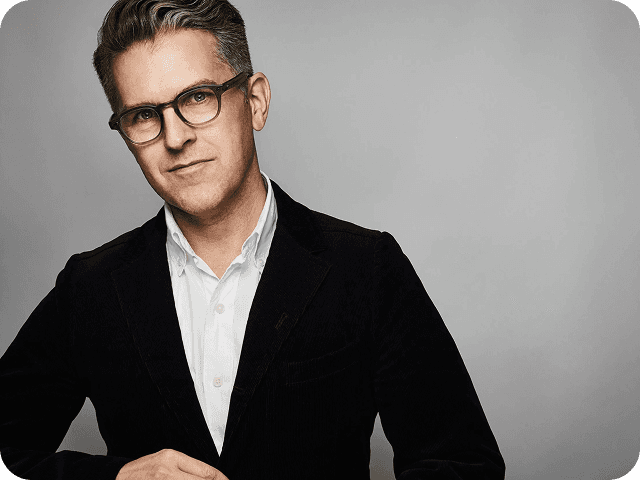
Age as a status indicator has long created unfair conditions in the labor market, but the perception of youth as the main indicator of success should be reconsidered. According to PR consultant John Mellkvist, the older generation has many underestimated strengths. In this interview, he discusses ageism from a new perspective and the promising years communicators have ahead of them.
John Mellkvist has long been a prominent voice in the debate on age discrimination in the labor market. Last year he debuted with the book “Choose Your Age: A Book for Every Even and Odd Birthday.” The message is clear: it’s time to shelve the so-called “midlife crisis” and instead focus on the natural advantages that come with greater experience.
“The communications industry has equated organizational rejuvenation with future-proofing”
Even though we are expected to work well past the age of 60, many people start feeling career anxiety already in their thirties and may even see their career prospects as bleak by the time they reach forty. For example, people may choose to stay at the same workplace out of fear that they are “too old” to change direction or apply for new jobs.
“Ageism exists in every industry, and some roles are more exposed than others. In professions heavily influenced by digitalization, generational differences become particularly noticeable. This is the case in the communications industry, where organizational rejuvenation has been equated with future-proofing, leading to increased uncertainty around competence among older professionals.”
“There are many things that often improve with age. Better understanding of people, more grit, a broader perspective on the world, a larger vocabulary, and stronger intuition, to name a few.”
Increasing demands for technical qualifications can be both a challenge and an opportunity—it all depends on perspective, John explains. The same applies to how we view the value of age in working life.
“There are many things that often get better with age. Better understanding of people, a stronger grasp of the world around us, more grit, a larger vocabulary, and better intuition, to name a few. You also tend to become more pragmatic and quicker in your decision-making. Many people also experience less anxiety and less prestige in their roles.”
Ageism is talked about more than ever
As recently as 2018, the concept of ageism was still relatively new in media discussions. Although awareness of age discrimination has existed for a long time, the conversations were often limited, and the prejudices difficult to expose. But in recent years, the discussion about age has increased.
Using All Ears’ AI-powered media monitoring and analysis, we have gathered data on this development. The statistics show a 150% increase in discussions about ageism between 2018 and 2020. In 2021, we can see a slight decline, but according to John the results are nuanced.
“Since 2020, we have started addressing age-related issues from a broader perspective. We are beginning to look beyond the negative aspects and discuss the advantages that come with experience. We are examining how organizations can include more older professionals based on insights into how society is changing and what people demonstrably become better at over time. The discussions are far more nuanced and extend beyond negative stereotypes.”
Future employers should take an age-inclusive approach
Although media discussions highlight structures and prejudices about older professionals, simply raising awareness is not the same as solving the problem. Instead, we need to work operationally and concretely to create change in the labor market, John argues, for example by implementing open language and values that welcome older applicants in recruitment processes.
“The design and tone of communication play a major role in a company’s attractiveness and people’s willingness to apply for open positions. We often assume from the outset that age is a factor—and that our own age is the wrong one. That’s why we need clear signals that this is not the case. Sometimes a single line from an employer emphasizing that applicants of all ages are welcome can make a big difference.”
Digitalization creates new opportunities in the labor market
Although John believes ageism is inevitable, he argues that we must become better at highlighting the advantages that come with age. We should not diminish the problem, but we should also recognize the factors that give the older generation an advantage.
“I am convinced that ageism will always exist, because comparing ages is a deeply human way of relating to life. Discriminatory behaviors that have long existed quietly will likely continue, but they will increasingly be brought to light—and in doing so be pushed further away from the center of working life and society.”
About All Ears
All Ears was founded to help people monitor, understand, and measure the new spoken media landscape. We are the first media monitoring platform with full coverage of spoken media. Today we analyze TV, radio, podcasts, YouTube, and social media channels across several countries.